
The journey towards net zero is pushing every sector to consider how it can reduce emissions, and the waste industry is no exception. While waste prevention, recycling and keeping materials in circulation remain key priorities, attention is also turning towards emissions that cannot currently be eliminated.
A new carbon capture trial involving Veolia and Sheffield City Council could provide an indication of how some of these residual emissions could be addressed.
Carbon Capture in Sheffield
Veolia has successfully trialled new carbon capture technology at the Sheffield Energy Recovery Facility, working alongside clean technology company C-Capture. The facility processes residual waste that cannot be recycled, using it to generate electricity and provide heat for Sheffield’s District Energy Network. The trial introduces carbon capture into this process, removing CO₂ from the facility’s flue gases before it reaches the atmosphere.
The technology uses a specially developed non-amine solvent to capture CO₂, which can then be regenerated and reused. Initial results show that the system can capture up to one tonne of CO₂ per day. The two-year trial will help determine whether the technology could eventually provide an effective and commercially viable solution for capturing carbon at waste management facilities.
What Could This Mean for the Waste Sector?
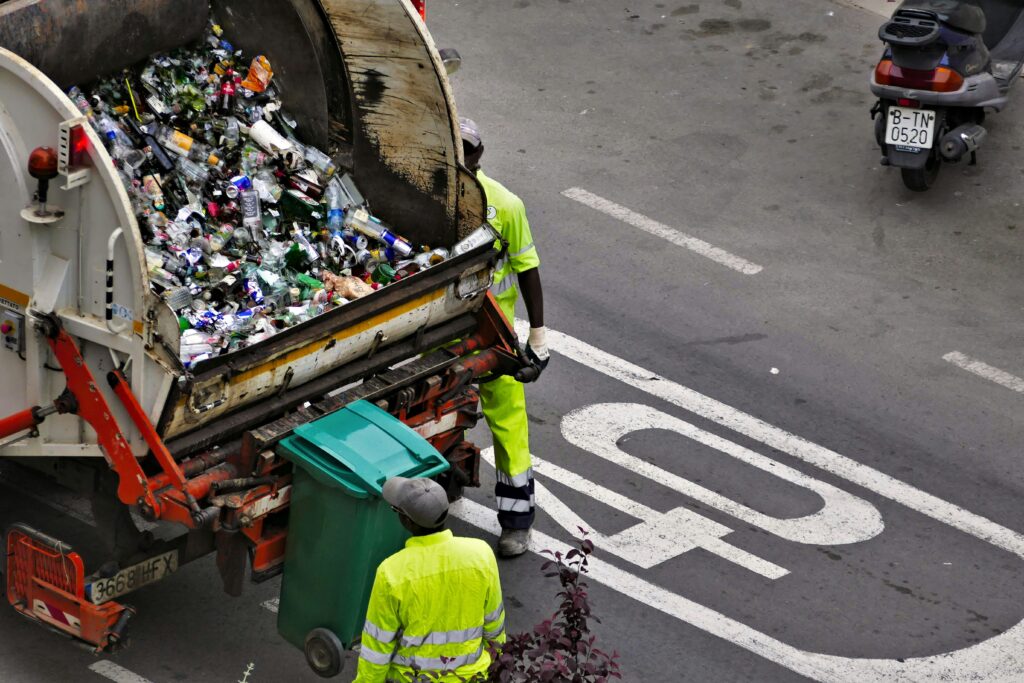
Waste prevention, reuse and recycling should continue to sit at the heart of the circular economy. However, residual waste that cannot practically be recycled will remain a challenge, meaning Energy Recovery Facilities are likely to continue playing a role within the UK’s waste infrastructure.
Carbon capture could help reduce the environmental impact of these facilities by tackling emissions that are difficult to avoid.
Rather than replacing recycling or waste reduction initiatives, carbon capture could work alongside them. Waste can be reduced wherever possible, more materials can be reused and recycled, energy can be recovered from what remains, and carbon capture could help address some of the resulting emissions.
The potential impact becomes even greater if the technology can be successfully scaled. Previous research from Veolia suggested that implementing carbon capture, utilisation and storage across its UK Energy Recovery Facilities could potentially save more than 100,000 tonnes of carbon each year.
Can Carbon Capture Be Scaled Up?
There are still significant challenges before carbon capture becomes commonplace across the waste sector. Operators will need to consider the cost of installing and running the technology, while the UK will require sufficient infrastructure to transport and permanently store captured CO₂. Supportive regulation, investment and viable commercial models will also be essential.
The Sheffield project is therefore an important opportunity to understand how carbon capture performs in a real-world Energy Recovery Facility. If the technology proves effective and economically viable at scale, it could become another valuable part of the waste sector’s transition towards net zero.
Ultimately, the future of waste management is unlikely to depend on one solution. Waste prevention, reuse, recycling, energy recovery and emerging technologies will all have a role to play. Carbon capture could provide an important additional step by helping tackle emissions that remain after everything else has been done.